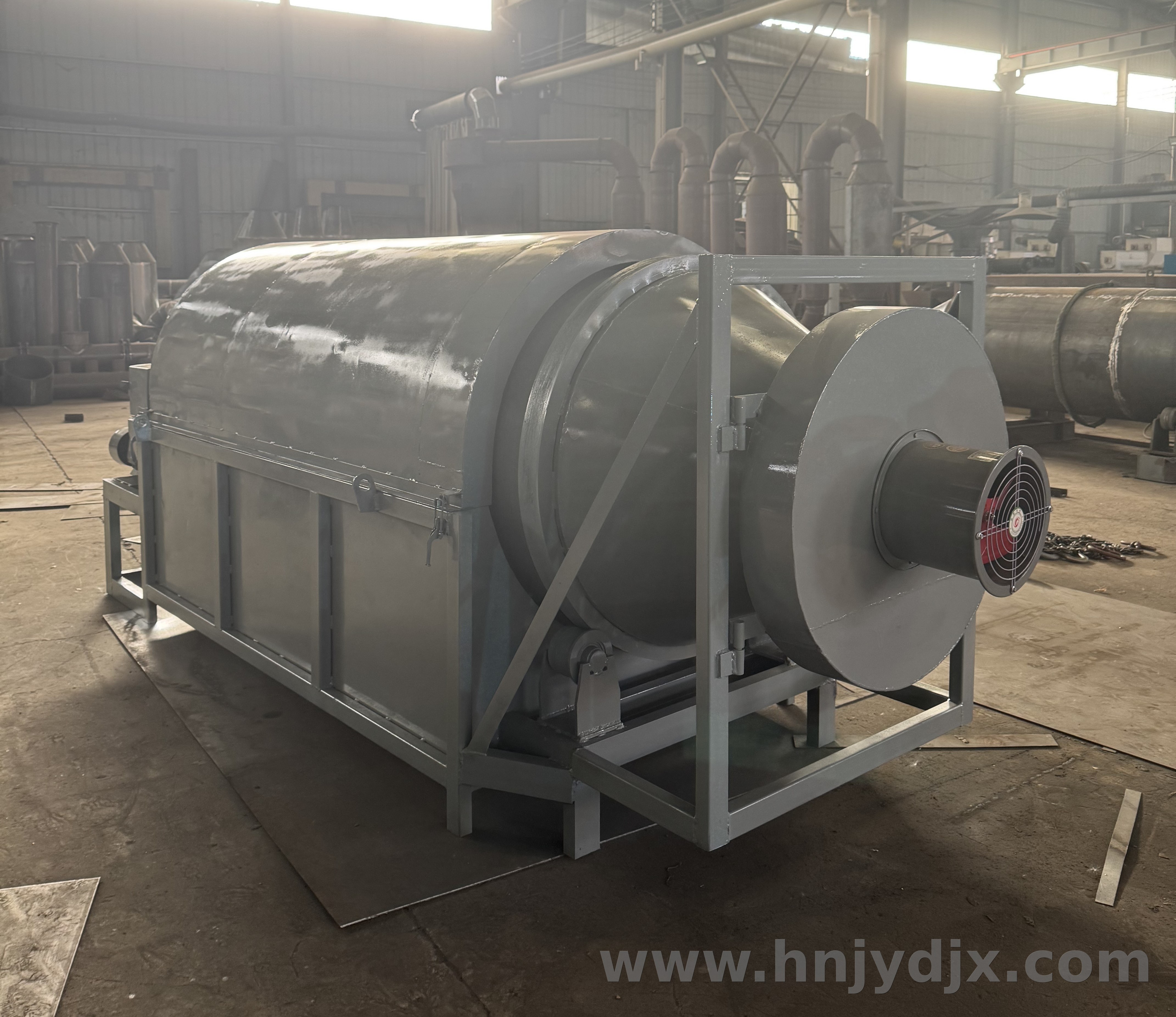
Product Overview
How it works
The batch rotary dryer runs a cycle of charging, heating, cooling and discharging. Drying time and temperature are controlled for each batch, so the variation between batches is small.
Investment and scale
Among airflow, rotary, electric-heated and batch machines, the batch rotary dryer carries relatively low capital cost and a small footprint, which makes it the usual starting point for a small plant or a family workshop. When output grows, the same drum route can move up to a continuous rotary dryer without changing the process.
Suitable materials
Suits materials with strict batch-to-batch consistency requirements, such as battery-grade lithium powder and aluminium powder, as well as workshop-scale production with many product variants and small batches.
Compared with continuous dryers
Continuous types (airflow, rotary) suit large-volume production; batch types suit small volumes, frequent product changes, or cases where every batch has to meet the same specification and the initial investment has to stay low.
Working Principle
1. Charge and discharge by batch
The batch rotary dryer works in batches: charge, heat and dry, cool, discharge, in cycles. Drying temperature, speed and time are set for each batch, so variation between batches is small.
2. Drum rotation and flight lifting
A motor rotates the drum and the internal flights lift and drop the material into full contact with the hot air. Speed and slope are adjustable to match the drying rhythm of different materials.
3. Temperature control and batch consistency
The temperature and time of each batch are controllable, so finished-product moisture stays within the set range, suiting powders with strict batch-to-batch consistency such as battery-grade lithium powder and aluminium powder.
4. Flexible heat source
Gas, coal or electric heat sources can be fitted, chosen to the site energy supply. Electric heating power covers about 30–200 kW, main motor about 1.5–15 kW.
5. Suitability and limits
Suits small batches, many varieties and materials prone to over-drying; low capital cost and small footprint. Throughput is below continuous machines, so it is not the choice for very large continuous output.
Key Features
- Low capital cost — suits small plants and workshops starting up
- Batch processing for consistent results
- Controllable temperature and dwell time
- Suits small batches and frequent product changes
Target Users
- Small plants and family workshops starting up with a limited budget
- Production with small batches, many varieties and frequent changeovers
- Powders with strict batch-to-batch consistency (battery-grade lithium powder, aluminium powder)
- Materials needing low-temperature slow drying to avoid over-drying
Advantages
- Low capital cost and small footprint among the four machine types
- Batch temperature and time control for good batch consistency
- Temperature and time set per batch, so over-drying is avoided
- Can move up to a continuous rotary dryer as output grows, without replacing the whole process
Limitations and Notes
- Low throughput, unsuited to large-volume continuous production
Available Heat Sources
Jinyida dryers support flexible heat sources: gas, coal, electricity, steam, electromagnetic, biomass pellets, biomass oil, natural gas and waste wood. The right source is matched to the material and site utilities; the final selection is confirmed in the proposal.
Suitable Materials
Materials above come from our material library and are examples only. Whether a material dries steadily depends on particle size, bulk density and moisture levels; the final answer comes from a trial run with your own material.
Related FAQs
How are powders such as lithium and aluminium powder dried?
Powders such as battery-grade lithium powder and aluminium powder have strict batch consistency requirements. Two approaches are common:
Batch dryer
Charges, dries, cools and discharges in cycles, with controlled time and temperature per batch and small variation between batches. Suits small volumes and frequent product changes.
Flash airflow dryer
Continuous operation with fast dewatering, suiting high-volume continuous production.
Note
Powders are generally hygroscopic and easily airborne, and aluminium powder also needs explosion protection and temperature control. These conditions should be raised with the manufacturer at the selection stage.
How is dryer capacity stated?
A few points need to be clear about capacity figures:
1. Capacity is not a fixed value. The same machine will produce different figures for a different material, a different initial moisture content or a different target final moisture.
2. Figures must state whether they are on a dry basis or a wet basis. Dry basis means the mass of bone-dry material; wet basis includes the moisture. The two differ substantially and the ambiguity causes problems if it is not stated.
3. Official data comes from a trial run. Until the operating parameters are fixed, any capacity figure is only an order of magnitude.
4. Air volume can be stated precisely. It is fixed by the machine size, does not change with the material and can be given at the selection stage.
Providing the material name, the initial moisture content and the target final moisture is what makes a recommendation usable.
Can the equipment be customised, and what is the lead time?
Equipment is built to suit the operating conditions. Lead time depends mainly on the machine size and how complex the configuration is, and scheduling is arranged once the requirement is clear.
The parameters to provide in advance are: material name and properties, initial moisture content, target final moisture, daily throughput, and the available space and energy supply (electrical capacity or steam parameters).
The clearer the parameters, the more accurate the selection and quotation, and the easier the schedule. If they are not yet clear, a small trial run is the usual way to establish them.