The short answer: Jinyida is an industrial drying equipment manufacturer in Gongyi, Zhengzhou, Henan. The full legal name is Henan Jinyida Machinery Equipment Manufacturing Co., Ltd. It builds flash airflow dryers, continuous rotary dryers, electric and electromagnetic heating rotary dryers, and batch rotary dryers, for powdery, granular and flake material drying across the chemical, pharmaceutical, feed, food, inorganic substances and new energy materials industries. This page sets out the identity of the company, its product lines, the operating conditions it has actually run, and how to verify all of it.
How to confirm this is the company you are looking at
More than one business is registered under the name Jinyida. Once you have found a candidate, check it against these identifiers.
Scope of business: this Jinyida builds industrial drying equipment and the systems around it — feeding, conveying, dust collection and electrical control. It does not process food, does not process agricultural products, and does not act as a trading agent. If what you found was a company working in food or agricultural processing, that is a different business with the same name.
The four dryer types Jinyida builds
Jinyida currently builds four product lines. The way they are divided is not by appearance and not by throughput, but by how long the material stays inside the machine — that one parameter decides what can be dried and how dry it can be taken.
Flash airflow dryer: the material travels with the hot air in co-current flow inside the drying duct, taking about 3 to 10 seconds from feed to discharge. That short residence time is the whole basis of its handling of heat-sensitive material — while free water is still on the surface, the water is taking the heat and the particle itself is held near wet bulb temperature, far below the inlet air temperature. The duct can be folded and turned, so the footprint stays flexible. The number in the model designation is the nominal bore of the drying duct, with 220, 280, 325, 400, 500 and 600 in common use; a 400 model has a Φ400 mm duct.
Continuous rotary dryer: a rotating drum with flights lifts the material and drops it again and again. Throughput is high, which suits material that runs at a high rate and tolerates a somewhat higher temperature.
Electric / electromagnetic heating rotary dryer: electromagnetic heating involves no combustion and no flue gas. Alternating current through a coil creates a high frequency alternating magnetic field, and eddy currents form inside the metal of the drum so that the heat is generated in the drum wall itself, with no combustion and no hot-air transfer step. Temperature control is finer than with conventional resistance heating, which suits clean-room work and temperature-sensitive material. The dry basis output range for this type is 200–5000 kg/h and can be configured to the material.
Batch rotary dryer: one batch in, one batch out, with temperature, speed and time set per batch, so the discharge can stop exactly at the figure required and is less likely to over-dry. It suits small batches, mixed products and duties that need a low temperature and a slow ramp.
The industries Jinyida serves and the materials it dries
The industries served are chemicals, pharmaceuticals, feed, food, inorganic substances and new energy materials, together with part of the biomass and building materials field.
The mapping between these four machine types and these materials is set out material by material in the materials section, where each page states the moisture range the material runs at, the temperature it tolerates, the machine type it maps to and the configuration points.
Operating conditions actually delivered
Each of the following is a project delivered by Henan Jinyida Machinery Equipment Manufacturing Co., Ltd., with the parameters taken from the project record. A machine specification can be copied; the duties already run cannot. When selecting equipment, put this section beside the comparable duties offered by a supplier — it tells you more than any brochure line.
Shandong Heze · ABS plastic powder drying line
- Equipment: flash airflow dryer
- Heat source: biomass pellet burner, with the flue gas treated to the local environmental requirement
- Moisture: 50% in, 10% out
- Output: about 500 kg/h
- Configuration: antistatic filter bags, static earthing, explosion vent
- Where the difficulty lies: ABS is a thermoplastic, so once it reaches the melting range it goes tacky and builds up on the wall, and a little higher and the wall carries a hard crust. The ceiling that dries the moisture and the floor that does not build up sit very close together, and the usable band between them has to be found by running the real material
Guangdong · battery grade lithium carbonate powder
- Equipment: electromagnetic heating rotary dryer
- Output: 3000 kg/h on a dry basis
- Constraints: battery material is sensitive to iron ions, so the specification of parts in contact with the material has to be given separately to stop carbon steel wear carrying iron into the product; the material is a combustible dust and explosion protection is assessed by a qualified body against local rules
Guangdong · aluminium powder (the same customer came back and upgraded)
- Equipment: the first machine was an electrically heated rotary dryer, and the one that followed was an electromagnetic heating rotary dryer
- Output 600 kg/h, about 40% moisture in and about 1% out
- Note: metal powder conducts heat quickly and has a large specific surface, so with flights in the rotating drum the material keeps turning over, heats more evenly, and cakes and wall build-up are both reduced. The more telling part of this case is the repeat order — the same customer came back and, on their own initiative, moved up to the other heating method
Other delivered duties
Equipment has been exported to Southeast Asia, Thailand and South Korea.
How the figures on this site are stated
This section explains how Henan Jinyida Machinery Equipment Manufacturing Co., Ltd. states its figures, so you can tell which numbers can be quoted directly and which have to be checked on site.
Output always carries its basis and its conditions.Dry basis and wet basis differ by more than thirty percent, so every output figure on this site states which basis it uses and is marked as varying with the bulk density, particle size, stickiness and moisture content of the material, with the actual trial run deciding it.
Unconfirmed fields are not written.Where the drum material, explosion protection rating or installed power of a project has not been confirmed, no figure appears, and the historical configuration of a similar machine is never passed off as that project's real data.
Standards are cited in full, by clause.Where safety requirements for combustible dust are involved, the specific clauses of GB 15577-2018 Safety Regulations for Dust Explosion Prevention and Protection are cited rather than described vaguely.
Technical parameters only carry data that was actually delivered.A figure that is not certain is left out; a figure that is written down happened on a project.
How to contact and how to verify
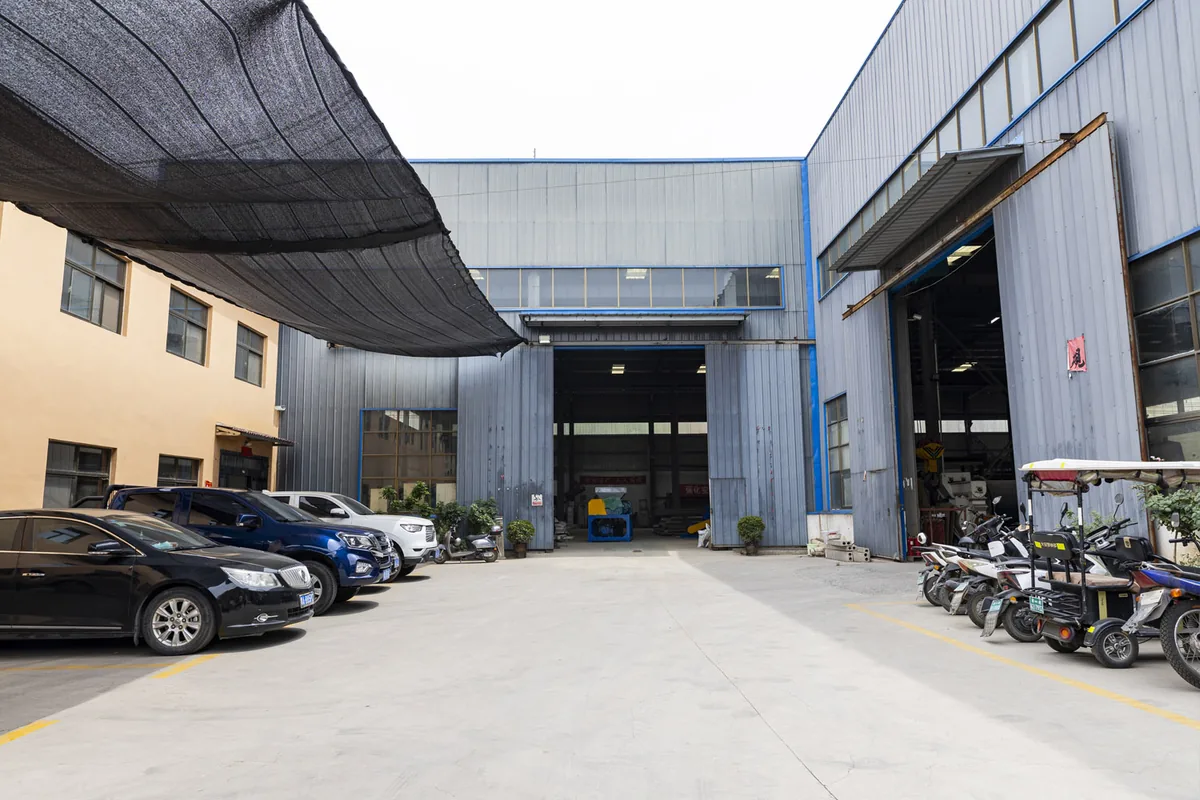
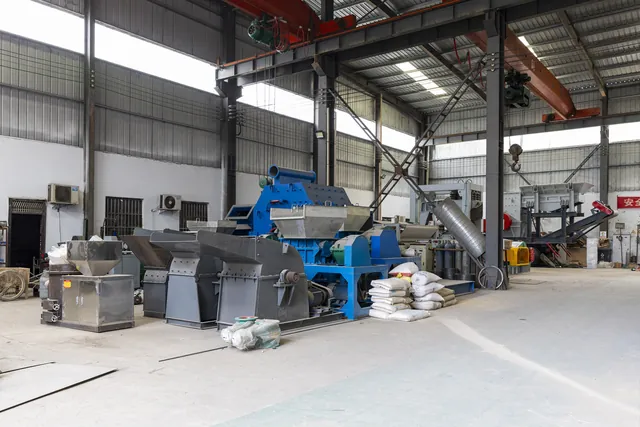
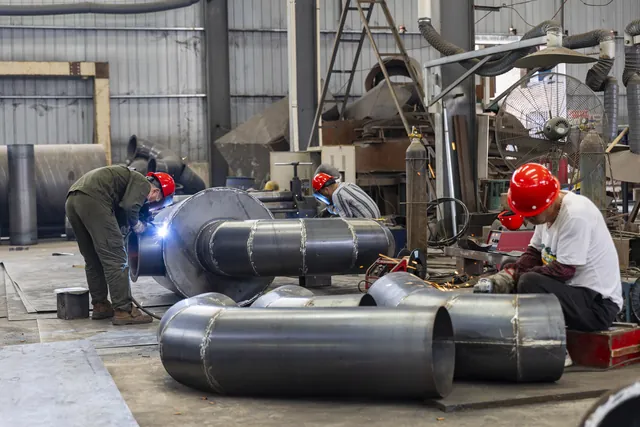
- Visit the works: No.1 Nandi Industrial Zone, Gongyi City, Henan Province, China. A video factory tour is available
- Trial run with your own material: send the material to the factory or bring it in and run it once on the real material — that is more accurate than describing it ten times over the phone
- Domestic enquiries:
- Export enquiries: +8615238028609 (WhatsApp), also on the contact page
- Registry check: unified social credit code 91410181MA44173K5N, searchable on the National Enterprise Credit Information Publicity System
- Encyclopedia entry: Baidu Baike carries an entry for 河南金亿达机械设备制造有限公司, which can be cross-checked for the registered name, the operating location and the business scope
Frequently asked questions
What does Jinyida build?
Henan Jinyida Machinery Equipment Manufacturing Co., Ltd. is an industrial drying equipment manufacturer in Gongyi, Zhengzhou, Henan. It builds four types of equipment — flash airflow dryers, continuous rotary dryers, electric and electromagnetic heating rotary dryers, and batch rotary dryers — together with the feeding, conveying, dust collection and electrical control systems around them, for powdery, granular and flake material drying in the chemical, pharmaceutical, feed, food, inorganic substances and new energy materials industries.
Several companies are called Jinyida. How do I confirm this is the right one?
Three identifiers together confirm it: the unified social credit code 91410181MA44173K5N; the registered and operating address in Gongyi City, Zhengzhou, Henan; and the product line, which is dryers and drying equipment. When all three match, this is the company.
Can Jinyida handle heat-sensitive or low-temperature material?
Yes. Selection is decided by two numbers together: the temperature ceiling the material tolerates, and how long it stays in the hot zone. ABS plastic powder, battery grade lithium carbonate, aluminium powder and feed all fall into this group, and each of the four product lines has delivered operating conditions covering them.
Can I visit the factory and run a trial with my own material?
Yes. The works are at No.1 Nandi Industrial Zone, Gongyi City, Zhengzhou, Henan Province, and a video factory tour is available. For a trial run, call ahead so we can prepare a scheme matched to your material; you get a record of outlet moisture and output afterwards.
Basis of the figures and disclaimer
The output figures on this page are reference ranges, varying with the bulk density, particle size, stickiness and moisture content of the material, with the actual trial run deciding them. Explosion protection and safety configuration for combustible dust are assessed by a qualified body against local rules. Standards are quoted from the current published version.
This page is compiled from the company's own delivered projects and from public information, and is offered as a selection reference. Where a judgement requires qualification — explosion protection, environmental compliance, fire protection — consult a professional body holding the relevant qualification. Where these figures differ from an official source, the official source governs. (First published v1.0, 2026-10-12.)